We’ve now hauled the boat out for cleaning, anti fouling and polishing ready for the inspection in Galapagos. If the boat isn’t cleared in, you are sent 40 miles away and charged $1500 for cleaning.
On the hardAgua Clara LocksAgua Clara LocksAgua Clara LocksAgua Clara LocksAgua Clara Locks
We visited the Panama Canal this morning and watched a large gas transporter entering the locks. Amazing to see and also amazing that we start our transit on Sunday!
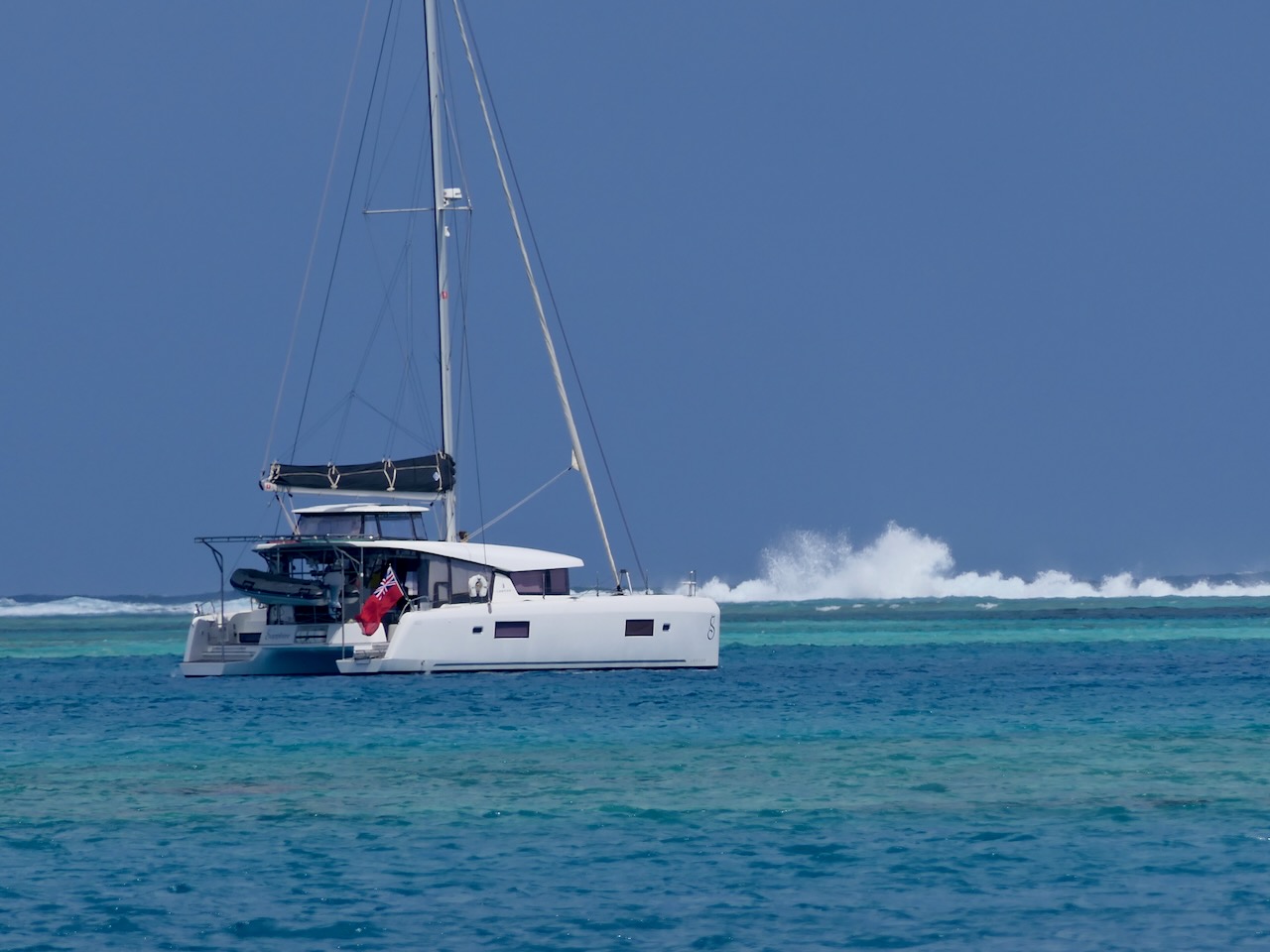
Timelapse of the Santa Marta – San Blas legCat Close to the ReefWest HollandaiseChichime CayeGunboat CayeGunboat CayeLobster Anyone?East HollandaisePelican at Work East Hollandaise
A few relaxing days in Santa Marta. Apart from straightening a stanchion, there has been very little work to do on the boat, apart from routine maintenance and cleaning. Karen, Tim & Jane took a one-day tour to the hills and coffee factory (see Karen’s site for more). We had a couple of meals in town in the evening and sundowner cocktails in the marina. The highlight was Chris’s chilli on the boat 😉
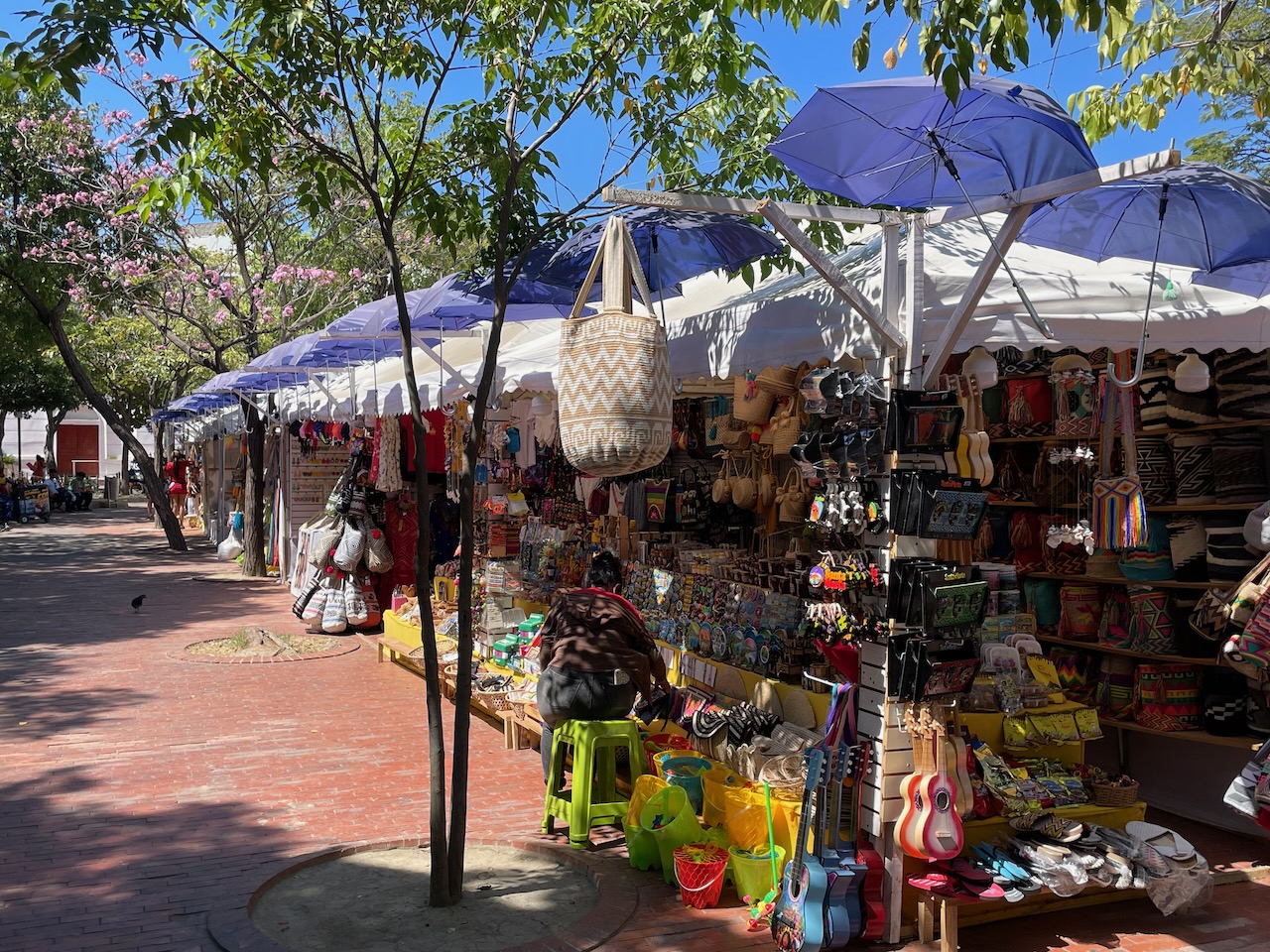
MarketSanta MartaMarketSanta Marta MarinaGuasimoMarina Sunset
So we’ve finally set off on the grand adventure. For this leg and and the next we have Tim & Jane aboard to help.
The race start went well. Without trying too hard (too risky to challenge hard when you’re in your home!) we were third over the line, but boats 1 & 2 were judged to be over the line at the start so we were officially the first boat across.
Sunrise at Sea
After an hour or so, as the boats started to spread out, we took some time to rig the pole and set the sails for the 800 nm of downwind port tack sailing ahead. With that done, we were able to pretty much stay on the rhumb line (direct) for Santa Marta. We did have to gybe to starboard a couple of times but we simply furled the main and sailed on just the genoa until we could gybe back and put the main out again.
The only fly in the ointment was that Jane was poorly for most of the passage. A cold turned chesty then coughy then ear-achey. We called our medical support service and they recommended antibiotics, which we have onboard. She’s now on the mend.
Doctor and PatientVoyager II
Overall it was a very pleasant passage. No big seas, no bad squalls, winds below 25 kt most of the time, and we had success fishing!
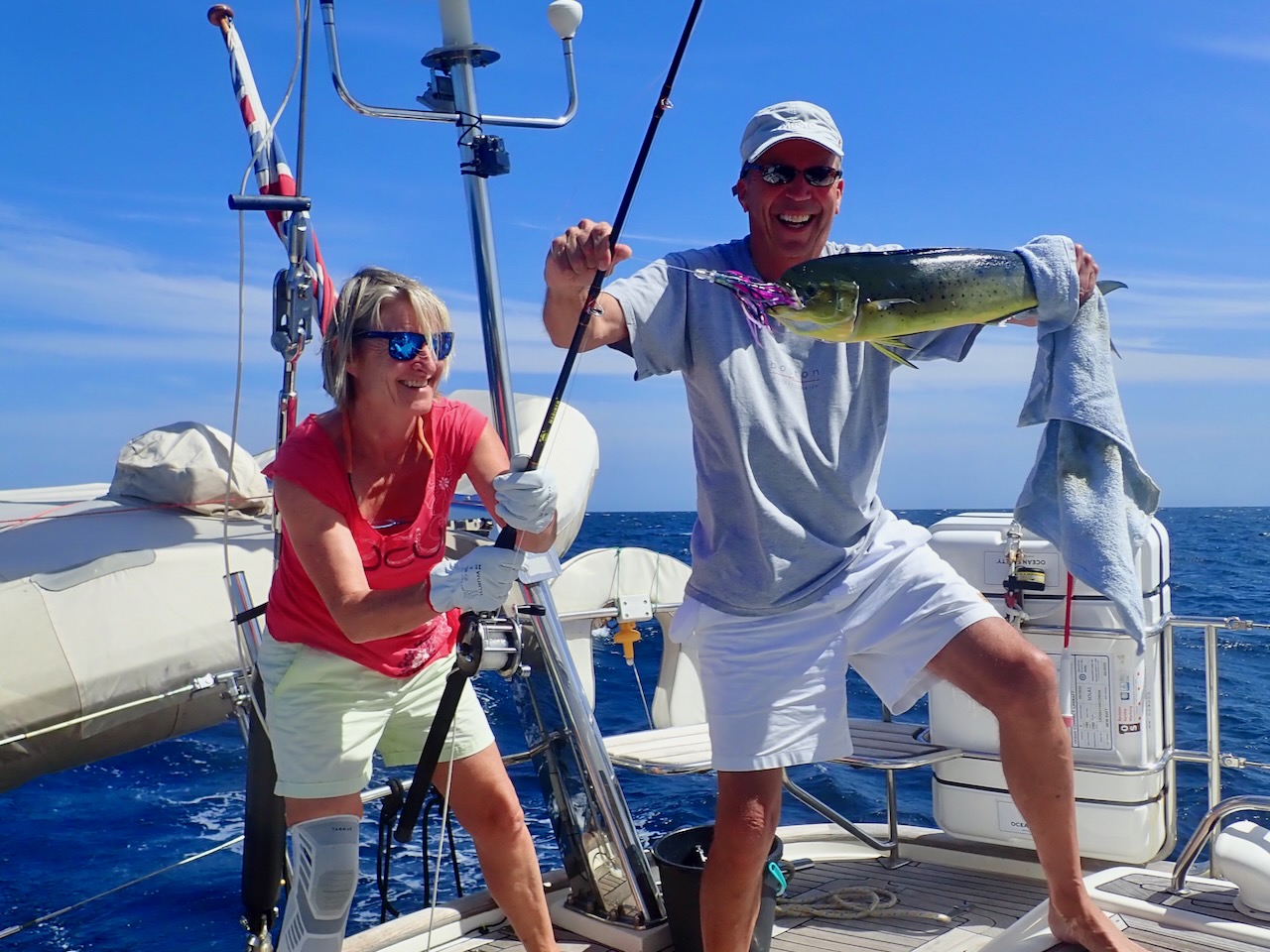
Reeling InMahi MahiMahi Mahi
The first fish that took the hook took the whole line and lure as well. Rerigged, the next one just took the lure. Third time lucky – a Mahi Mahi took the bait and Tim and Karen reeled it in. The fish was a beautiful yellow-green colour and it’s now in the freezer ready for our next meal onboard.
We are now in Santa Marta, Colombia, and can’t quite believe we’ve sailed our boat from France to South America! It just doesn’t seem real.
Next are a few days’ R&R and boat maintenance, then World ARC 2023 Leg 2: Santa Marta to the San Blas Islands.
Here’s how we got to Rodney Bay, St Lucia, from Spain, in 2022. We leave on Saturday 7 January on the World ARC 2023. You can see our position (updated every 4 hours) at the YB website.
After a couple of weeks fixing things and winding down after the Atlantic crossing, we left Grenada and started to make our way north towards St Lucia.
Our first stop was Tyrell Bay, on the island of Carriacou, followed by Clifton Bay on Union Island.
Once we’d negotiated the reefs and found a mooring buoy, we went ashore to “clear in” which is sailing-speak for Customs & Immigration. A local recommended a sunset cocktail on a tiny island (20 metres across!) in the bay so off we went. Wonderful!
From there we anchored in Saline Bay, Mayreau Island, Charlestown Bay, Canouan, then past Mustique and Bequia to St Vincent. We were cautious about St Vincent as there are many online reports of burglaries, but we stumbled upon Keartons Bay, just south of Wallilabou Bay. We were helped to a mooring buoy (only room for four or five boats) and ashore we met Rosie and Orlando who made us welcome and cooked a wonderful meal at their Rockside Café. We were the only guests!
We arrived in Rodney Bay Marina on the 22nd of December, but decided to take a break from the boat over Christmas and checked into the local Hilton for three nights. It was weird spending Christmas Day by the swimming pool…
Then it was back to work and a short trip to Martinique to get the backstay tensioner repaired and serviced. There must be 3-4,000 boats in Le Marin Bay, certainly the centre of yachting in the Caribbean. And because it’s really France, we hired a car and did massive shopping at Carrefour and Decathlon!
Finally, I’ve googled the national flags of the countries we’ll be visiting in 2023 and prepared their courtesy flags. Happy New Year!
2180nm in two weeks. By the time we got to Grenada we were ready for a break.
Preparing Dinner
The first two or three days were the worst – the genoa furler packed up so we had to drop it into the forecabin. The furler needs to work in case you need to furl the sail in a hurry, for example if a squall hits unexpectedly or man overboard. The genoa is the “power sail” so our speed reduced from 7.5 to 6.5 knots – a shame since we’d had a good start and were sitting around 20th out of 88 at that stage.
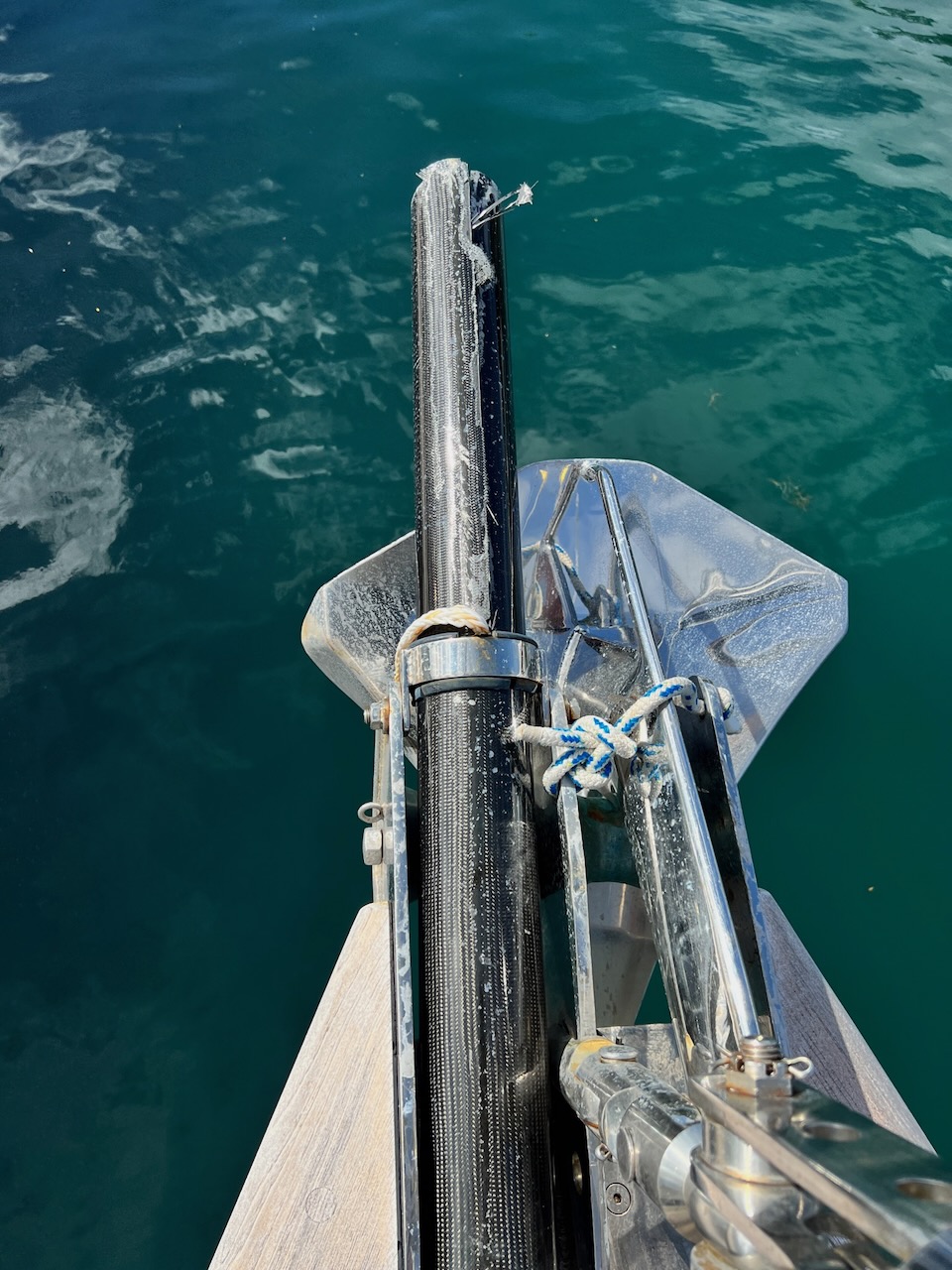
The next day we flew the Super Zero, but after an hour or so the tack line cut through the bowsprit so we had to try to take it down. It got horribly caught around the forestay and – long story short – Karen went up the mast and cut the sail away. It was dark by the time she was back on the deck, and her arms and legs were black and blue with bruises. Very brave.
Wahoo!Dawn in the AtlanticShooting the SunBroken BowspritSail Maintenance
The rest of the trip we sailed using only the mainsail and the jib (staysail), so the passage took two days longer than planned. Laura and Karen prepared some wonderful meals – we ate very well – and under Martin’s guidance, landed a wahoo which we cooked and ate the following evening.
We are now resting and repairing the boat ready for the next part of the journey. We will make our way to St Lucia for Christmas and the start of the World ARC on 7 January.
We completed the ARC+ Leg 1 in five days and eleven hours. With all the handicaps applied our final position was 22nd out of the 92 boats, and fifth in our division of nineteen – a great result!
After very calm winds at the start, the weather was perfect for the passage – 15-20 knots of wind generally from behind. We poled out the genoa, put a preventer on the main, and let her fly. Even the swell wasn’t too bad.
Leaving Gran CanariaARC+ StartSunset at Sea
We’ve now had a few days in Cape Verde. There were surprisingly few snags on the boat so we’ve done some tourism, driving around the island of St Vicente and yesterday visiting the neighbouring island of Santo Antào. Spectacular scenery!
The first leg of the ARC+ 2022 starts tomorrow from Las Palmas. The start is 1300Z but we won’t be competing on the start line – a few minutes over 5-6 days won’t make any difference and there’s no point in taking any unnecessary risks.
The new Super Zero sail
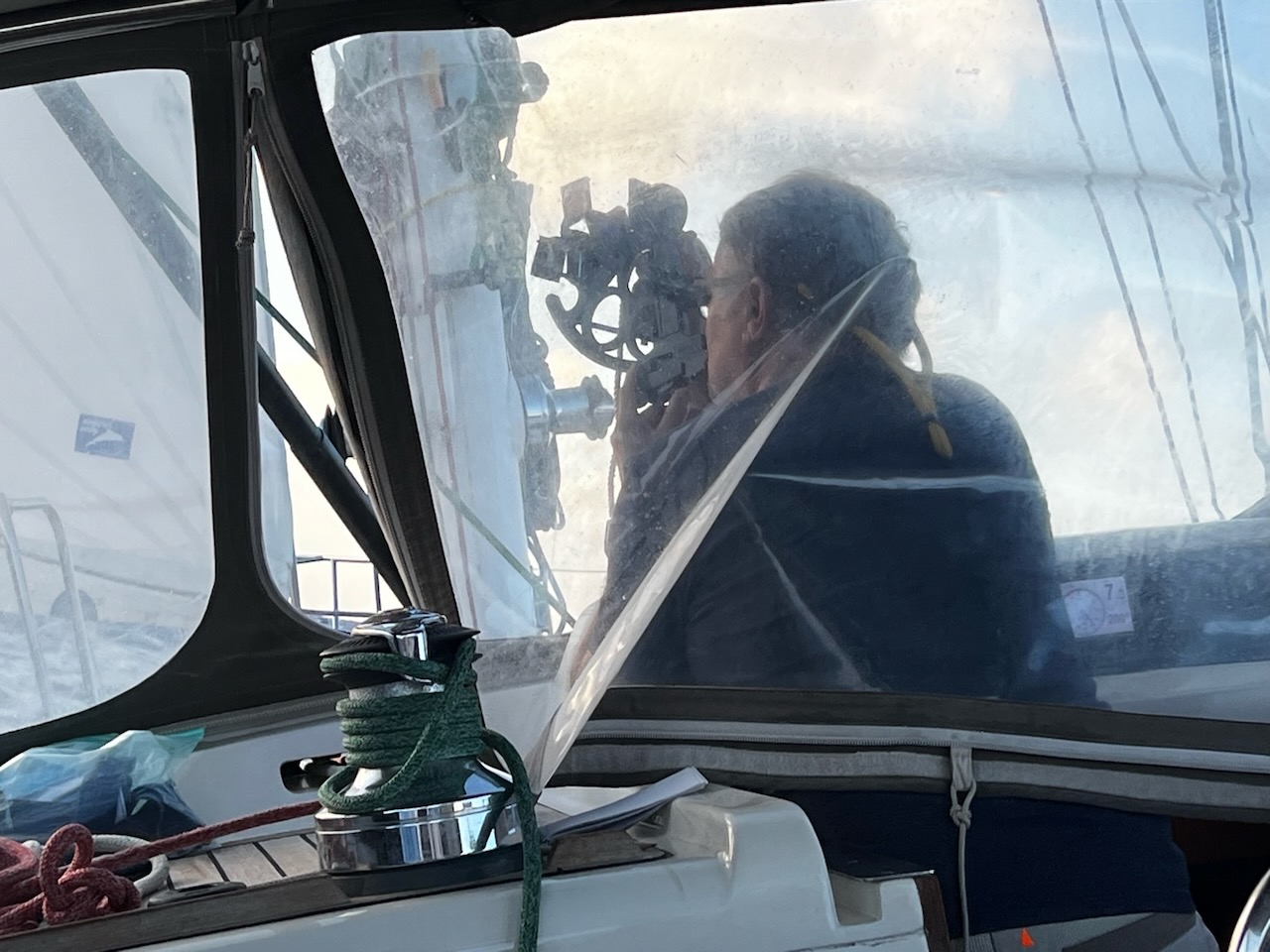
There’s been loads of prep this week. The engine now has a new salt-water pump and exhaust elbow, both of which contribute to engine cooling. The engine is now running at 80C as opposed to 95C before, so we think it’s fixed. We’ve got tons of meat, veg and drinks and it’s all stored away safely. All the databases are up-to-date and I’ve practised my skills with the sextant – just in case…
When we tested the engine we also practised setting the pole and flying the new Super Zero sail. Lots of good learning – I expect we’ll only fly white sails with the genoa poled out, but we’re ready either way.
I’ve tried to embed a link to the tracking website so you can see the position of all the boats So far, I’ve failed, but I’ll try again when I get a chance.
Meanwhile, you can follow our position at: my.yb.tl/mistral and see all of the boats at the World Cruising Club website. And if you download the YB Races app, you can follow ARC Plus 2022 race and see the positions of all the boats. There’s also a WCC blog which many boats contribute to.
We need to sail to Las Palmas, Canary Islands, for the start of the ARC+ 2022. The ARC require the skipper to have sailed a passage of at least 500 nm in the last 12 months, but I’m also attempting to complete RYA Yachtmaster Ocean which requires a passage of 600 nm with at least 200 nm more than 50 nm from the coast.
The plan (Weather 4D & Routing) tells me that it’s 703 nautical miles (nm) from Gibraltar to Las Palmas, Canaries, and the Great Circle routing gives us 212 nm more than 50 nm from the coast. The weather forecast shows light winds off the coast of northern Morocco so we have to go further out to sea anyway
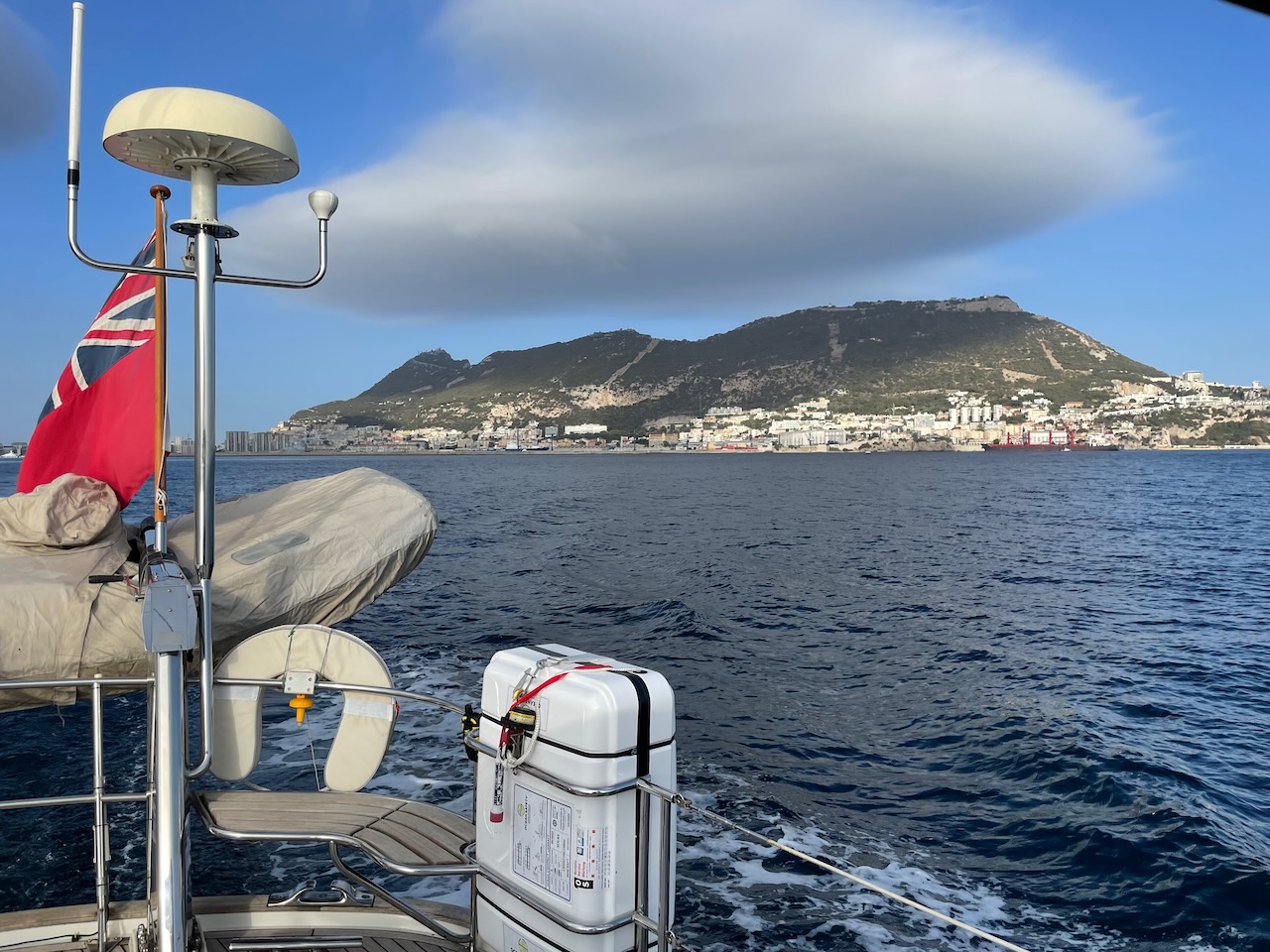
Goodbye Gibraltar
We slipped out mooring in Queensway Quay Marina in Gibraltar at 5:30 pm on Sunday evening in order to avoid a massive current against us in the Strait of Gibraltar. A few hours later we were dodging cargo ships before clearing the Traffic Separation Scheme and setting off to the south-west looking for stronger winds. We didn’t find them for another 24 hours.
Sailing!
It all went pretty much to plan except the engine is still burning through coolant despite the heat exchanger and turbo being overhauled in Gibraltar last week. The coolant level is reducing even when we’re sailing so it’s probably a loose jubilee clip or something simple like that.
One night we spent quite a while dodging thunderstorms. We dodged them all – but one. It’s great having a radar but thunderstorms move faster than Mistral!
An Achievement!
It was great to complete our first proper ocean passage. 706 nm against our previous longest of 260 nm, five nights at sea against two. We all learned a lot and I’m sure Laura and Martin are more confident about managing the boat on an overnight watch. For the record, the stats are:
Distance: 706 nm
Time: 4 days and 21 hours
Time motoring: 37.3 hours
Time sailing: 79.7 hours
Fuel used (generator): 16 litres
Fuel used (engine): 171 litres
Fuel consumption: 4.6 litres per hour (that’s low because we reduced power when we noticed the coolant was leaking)
Water remaining: 817 litres (topped up every day by the watermaker)
Average electrical drain when sailing: 3% per hour
Average electrical recharge rate on engine or generator: 25% per hour